The Hidden Gallery: Revealing the Untold Stories of Black Artists Who Shaped Contemporary Art is an activity developed by Form Creatives, on the occasion of the DMA's second annual Black History and Culture Celebration.
This interactive museum journey is designed to highlight contemporary Black artists during Black History Month. You’ll explore five key artists in the DMA’s collection on Level 1 and then experiment with these artists’ styles and techniques through a creative response activity using a discovery card. This program will continue with workshops and activations led by Form Creatives across the city during the month of February.
SAM GILLIAM (1933–2022)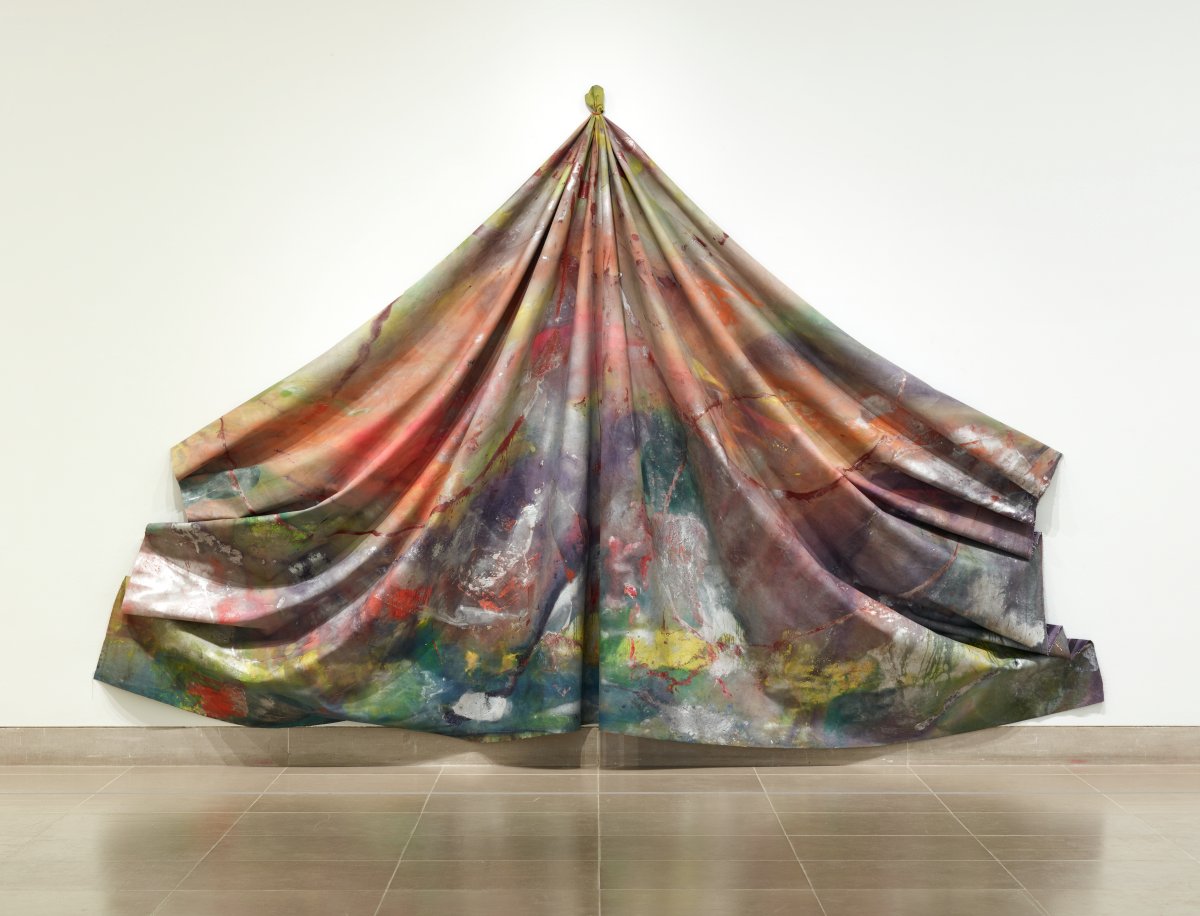
Sam Gilliam was a pioneering abstract painter associated with the Washington Color School. He transformed the possibilities of painting by removing canvases from their stretcher bars and letting them drape, fold, and fall like fabric, redefining abstraction and space.
Key Themes (Deeper Exploration)
- Liberation of the Canvas: Gilliam challenged the history of painting by physically freeing the canvas from the frame. His draped works embody movement, resistance to limitation, and the fluidity of Black expression.
- Improvisation + Rhythm: Strong influence from jazz. Compositions unfold like musical improvisations, embracing spontaneity and unpredictability.
- Embodied Color: Color is used not as decoration but as an emotional force. Gilliam’s layering and staining techniques allow color to seep, pool, and breathe.
- Spatial Experience: His works turn painting into sculpture, transforming the viewer’s relationship to art by making them move around and beneath the piece.
Techniques (Deeper Detail)
- Soak-Stain Method: Pouring, staining, and soaking pigments into unprimed canvas for organic diffusion.
- Draped & Suspended Fabric: Canvases are folded, tied, or suspended to create sculptural forms that respond to gravity and space.
- High-Intensity Color Layering: Transparent washes and opaque gestures are layered to build depth.
- Textural Surface Development: Scraping, folding, and manipulating the canvas while wet to leave permanent marks and creases.
Fun Fact:
Gilliam was the first major artist to completely remove the canvas from its stretcher bars. A move so radical at the time that critics didn’t know whether to call it painting or sculpture.
CHRIS OFILI (b. 1968)
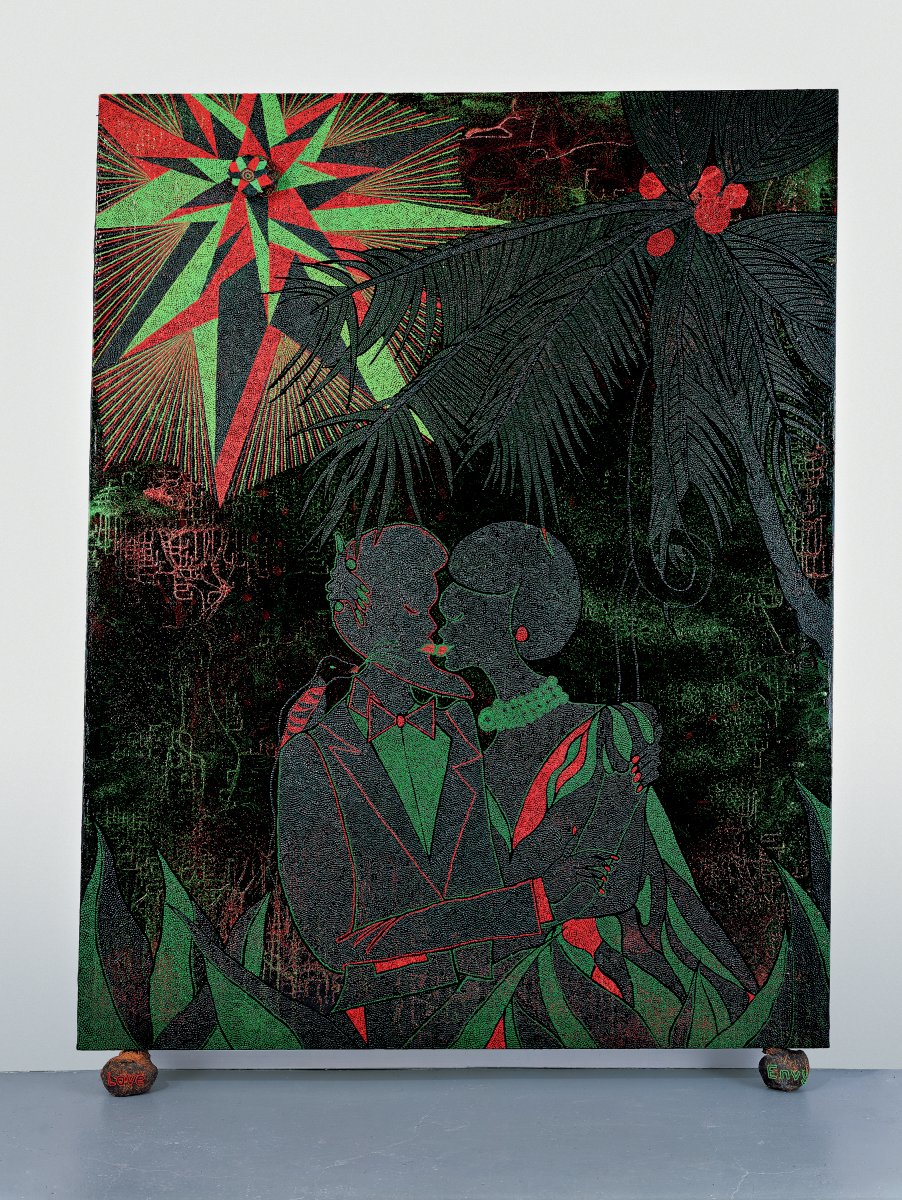
Chris Ofili is a British artist known for richly layered paintings that blend mythology, spirituality, pop culture, and global Black identities. His works combine glitter, resin, oils, and meticulous patterning.
Key Themes (Deeper Exploration)
- Mythmaking & Storytelling: Ofili’s work merges biblical references, folklore, and invented worlds, narrating new mythologies tied to Black identity.
- Spiritual Multivalence: His imagery often holds both the sacred and the everyday, revealing transcendence in the mundane.
- Pattern as Language: Decorative motifs become symbolic containers, referencing African textiles, illuminated manuscripts, and Caribbean visual culture.
- Embodied Black Presence: His figures often appear sensuous, confident, and ethereal, challenging historical narratives of Black bodies in art.
Techniques (Deeper Detail)
- Layered Mixed Media: Use of resin, glitter, collage, oils, and more to build luminous surfaces.
- Precision Patterning: Repeated dots, halos, and geometric fields act as texture and symbolic architecture.
- Saturated Color Fields: Deep blues, purples, and golds create emotional and spatial atmosphere.
- Narrative Composition: Complex scenes unfold slowly; motifs reveal themselves the longer the viewer looks.
Fun Fact:
Ofili painted a major body of work based on Homer’s Odyssey, reimagining Greek mythology through a contemporary Black lens.
NAUDLINE PIERRE (b. 1989)
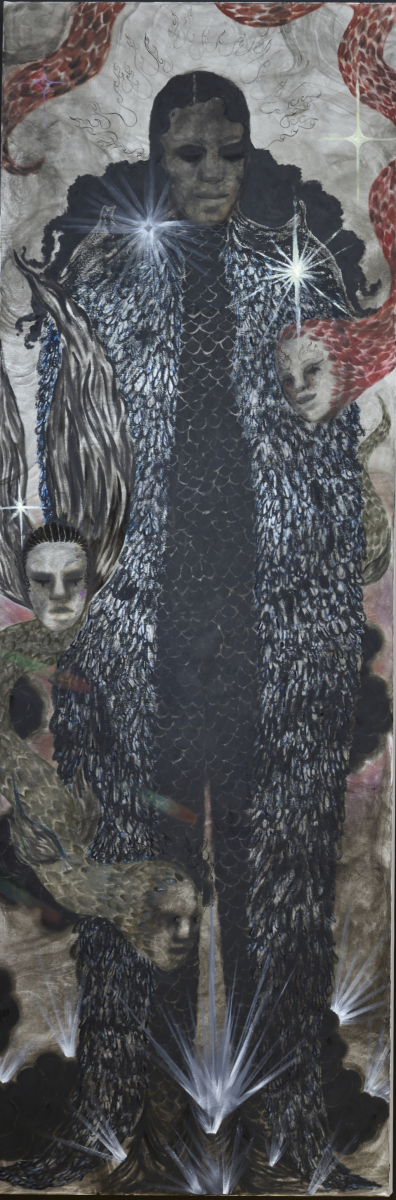
Naudline Pierre is a contemporary painter whose work explores transformation, protection, and otherworldly realms. Her figures often inhabit dreamlike environments filled with fire, angels, wings, and tenderness.
Key Themes (Deeper Exploration)
- Transcendence & Transformation: Figures shed constraints, are lifted, held, or reborn through protective and supernatural beings.
- Feminine Divinity: Pierre’s world centers Black women in positions of power, softness, and spiritual significance.
- Fantasy as Freedom: Her alternate universes create a visual refuge from earthly constraints and histories.
- Emotional Surrealism: Scenes evoke intense emotion rather than a literal narrative; longing, safety, desire, and rebirth.
Techniques (Deeper Detail)
- Glowing Oil Blends: Use of luminous, layered color gradients to create atmospheric lighting.
- Symbolic Iconography: Wings, portals, flames, and celestial forms build the visual language of transformation.
- Soft, Sculptural Rendering: Figures are modeled with tenderness and dimensionality, enhancing intimacy.
- Chromatic Narratives: Color guides the emotional tone; pinks for tenderness, deep purples for mysticism, oranges for revelation.
Fun Fact:
She studied medieval depictions of angels and saints, then reshaped them into powerful, protective Black figures.
PURVIS YOUNG (1943–2010)
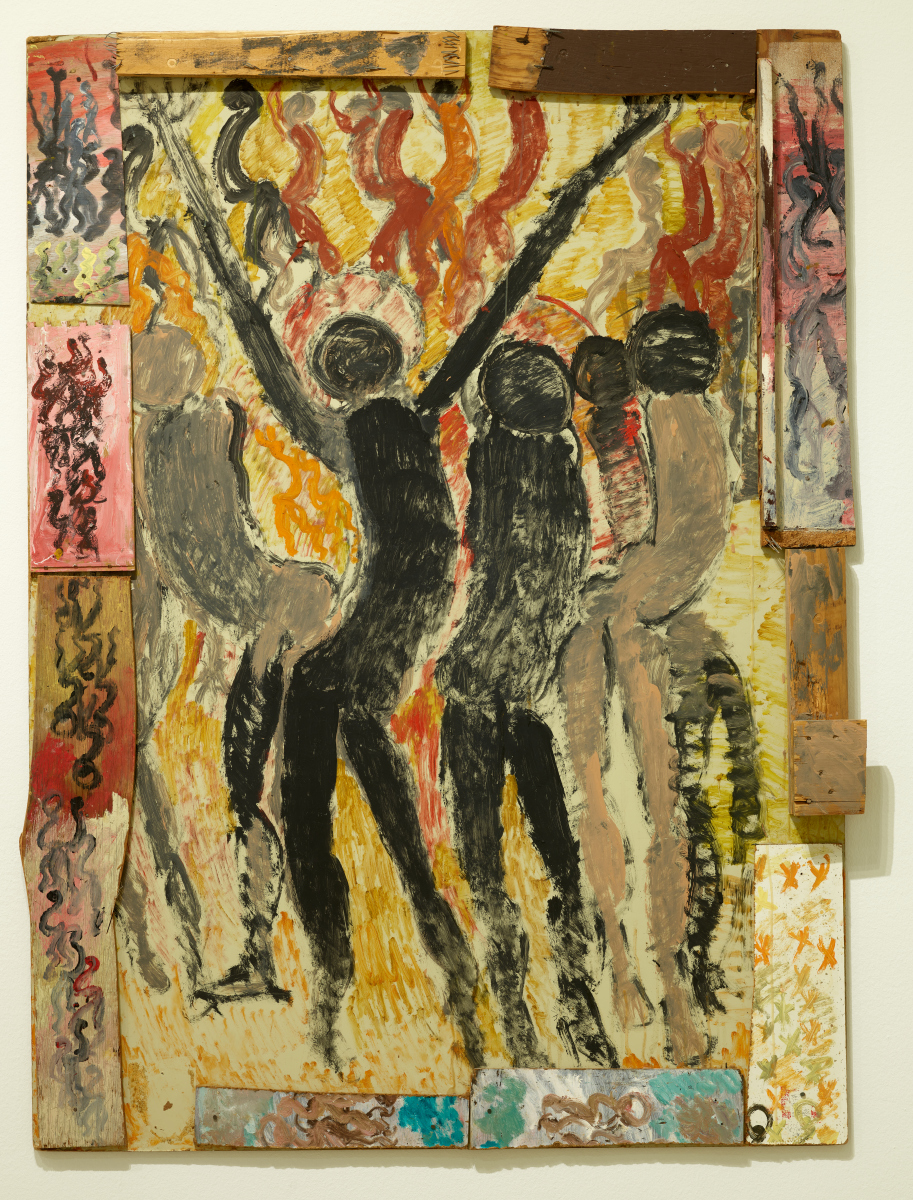
Purvis Young was a self-taught Miami artist known for visceral, expressive paintings using found materials. His work documents the struggles and spirit of the Overtown community, transforming discarded wood, books, and doors into powerful narratives.
Key Themes (Deeper Exploration)
- Documenting Black Life: Young’s art chronicles the energy, struggle, and spirit of his Overtown community in Miami.
- Angels & Protectors: Winged or elongated figures appear as guardians, offering hope amid hardship.
- Social Struggle: Themes of migration, protest, and injustice echo the weight of generational trauma.
- Reclamation & Creativity: Using found materials symbolizes reclaiming what society discards — people, histories, spaces.
Techniques (Deeper Detail)
- Found-Material Painting: Use of wood scraps, books, cardboard, and doors. Chosen for their history and texture.
- Expressive Gestural Brushwork: Fast, raw strokes convey urgency and emotional intensity.
- Repetitive Symbol Systems: Boats, crowds, horses, and angels recur with shifting meaning.
- Fragmented Surface Layers: Built-up surfaces create a worn, lived-in quality that mirrors community memory.
Fun Fact:
He created an entire neighborhood gallery by covering abandoned buildings with art. Before he ever entered a museum, he turned Overtown into an open-air museum for his community.
JEAN-MICHEL BASQUIAT (1960–1988)
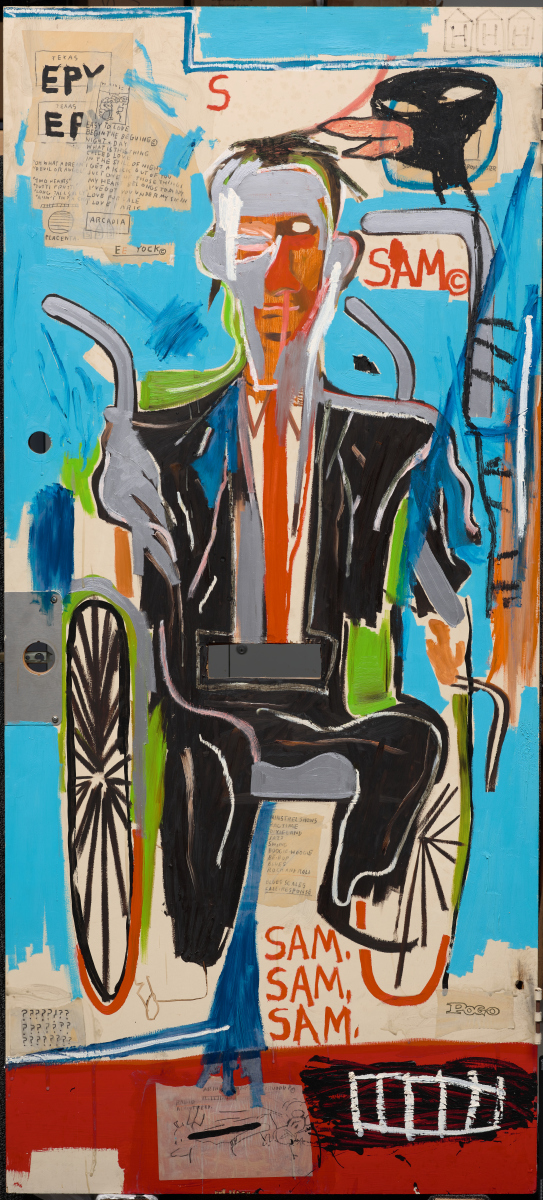
Jean-Michel Basquiat rose from New York’s graffiti scene to become one of the most influential painters of the 20th century. His work fuses text, symbols, anatomy, and cultural critique through an improvisational, expressive style.
Key Themes (Deeper Exploration)
- Rewriting Art History: Basquiat inserted Black heroes into a canon that historically excluded them, using symbolic crowns, names, and references.
- Identity + Power: His works critique racial inequity, capitalism, colonialism, and the vulnerabilities of the human body.
- Visual Jazz: Paintings unfold with rhythm and syncopation, mirroring the improvisational structure of bebop.
- Multiplicity of Meaning: Works often contain layered messages, hidden text, crossed-out words, and symbols that invite interpretation rather than dictate it.
Techniques (Deeper Detail)
- Mixed-Media Layering: Acrylic, oil stick, crayon, collage, and Xerox transfers create dense visual textures.
- Symbolic Iconography: Crowns, skulls, anatomical drawings, numbers, and repeated names act as a visual vocabulary.
- Energetic Linework: Rapid, aggressive strokes resemble drawing more than traditional painting.
- Intentional Erasure: Crossing out words was not a correction. It was an emphasis; what’s obscured becomes louder.
Fun Fact:
Basquiat carried a medical textbook everywhere. That’s why so many of his paintings include anatomical drawings, skeletons, and internal organs. He was fascinated by what the body hides.
Form Creatives is a Dallas-based arts organization that partners with galleries, museums, and public institutions to create educational art experiences that center Black artists, contextual learning, and community engagement. To learn more, visit www.formcreatives.com.
Credits: Leaf, 1970. Sam Gilliam. Acrylic on canvas. Dallas Museum of Art, gift of Timothy C. Headington, 2016.45. © Sam Gilliam / Artists Rights Society (ARS), New York. Afro Love and Envy, 2002-2003. Chris Ofili. Acrylic, oil, glitter, polyester resin, map pins, and elephant dung on linen, with two elephant dung supports. Dallas Museum of Art, The Rachofsky Collection Acquisition Fund, 2019.5.A-C. © Chris Ofili. Courtesy the artist and David Zwirner. Guardian (Somewhere), 2021. Naudline Pierre. Oil and acrylic on canvas. Dallas Museum of Art, Lay Family Acquisition Fund, 2022.12. Untitled (Soul Train), 1970s. Purvis Young. Acrylic on found wood. Dallas Museum of Art, TWO x TWO for AIDS and Art Fund, 2019.43.1. Sam F, 1985. Jean-Michel Basquiat. Oil on door. Dallas Museum of Art, gift of Samuel N. and Helga A. Feldman, 2019.31. © Estate of Jean-Michel Basquiat. Licensed by Artestar, New York.