Schedule:
1:00–1:45 p.m., Musical performance by Dr. Amie Maciszewski, Sangeet Millennium, Horchow Auditorium
2:00–3:00 p.m., Lecture, Horchow Auditorium
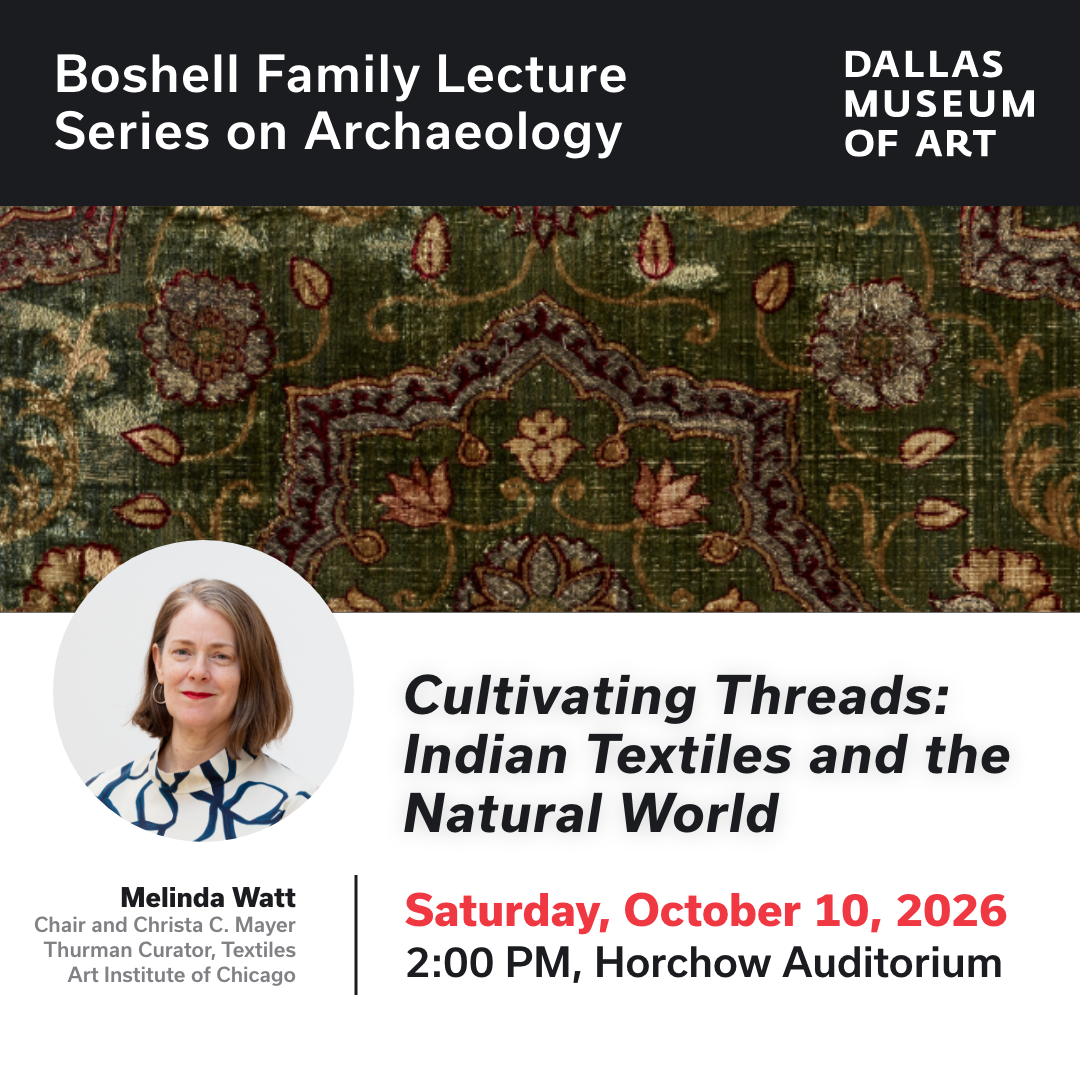
Join us for an exploration of the motifs and history of the 18th-century textile trade in celebration of our special exhibition Paradise on Earth: Florals in Indian Textiles. Melinda Watt, Chair and Christa C. Mayer Thurman Curator of the Textile Department at the Art Institute of Chicago, will illuminate the history, artistry, and global implications of the Indian textile trade.
Decorative textiles preserve and display flora and fauna as the artist and designer have captured them, and they serve to reveal nature at its best, accessible at any time of year and in any weather. Each element is at its most beautiful—when the irises, poppies, and narcissus are at their peak and the birds are perfectly still, the deer and goats and sacred cows are in comfortable repose, and the weather is pleasant. Illustrated with outstanding examples of historical and modern textiles from the Indian subcontinent, this lecture will explore textiles in a variety of techniques, including weaving, embroidery, kalamkari, and block printing, and how natural imagery is an intrinsic part of the Indian textile lexicon.
Not only are patterns, motifs, and themes based on flora and fauna, but the very making of textiles demands respect for and knowledge of natural resources. The methodology and techniques of makers on the subcontinent have been a source of great admiration and frustration to outsiders. The era of the intense Western trading company’s exploration and exploitation of India’s wealth also brought along curious scientists and manufacturers who sought to learn and reproduce fabrics such as the bold floral kalamkari and chintzes. For the most part, these explorers were thwarted by the differences in systems of knowledge transfer and recording. Thousands of years of intrinsic and inherited knowledge was not readily extracted and interpreted.
While textiles are only part of the story of Indian makers' and consumers’ relationship with the natural world, in a culture where cloth was and is still respected, even revered, as one of the highest expressions of cultural achievement, the design and making of cloth is an appropriate lens through which to consider this theme.
About the speaker:
Melinda Watt has been Chair and Christa C. Mayer Thurman Curator of the Textile Department at the Art Institute of Chicago since 2018. In this role, she oversees the global textile collection formed by a series of visionary department heads, and leads the textile installation program both within the department and throughout the museum. To date, her exhibitions at the Art Institute include Morris and Company: The Business of Beauty (2021), Fabricating Fashion (2022), Gio Swaby: Fresh Up (2023), and Threaded Visions: Contemporary Weavings from the Collection (2024). Watt was President of the Textile Society of America (2020–2024) and is a Board Member of the Centre International d’Etude des Textiles Anciens (CIETA). In 2025 Watt will receive the annual John and Frances Glessner Award for her research on the historic Glessner House’s William Morris textiles.
Previously, Watt was a curator in the Department of European Sculpture and Decorative Arts at the Metropolitan Museum of Art, as well as Supervising Curator of the Antonio Ratti Textile Center. She co-curated Interwoven Globe: The Worldwide Textile Trade, 1550–1800 (2013), and organized an exhibition of the museum's collection of 17th-century embroidery at the Bard Graduate Center. The catalogue, English Embroidery from The Metropolitan Museum of Art 1580–1700: 'Twixt Art and Nature, was awarded the Textile Society of America's annual book award for 2008. She also organized several smaller exhibitions in the Antonio Ratti Textile Center’s gallery, including An “Industrial Museum”: John Forbes Watson’s Indian Textile Collection (2013) and Elaborate Embroidery: Fabrics for Menswear before 1815 (2015).
About Dr. Amie Maciszewski:
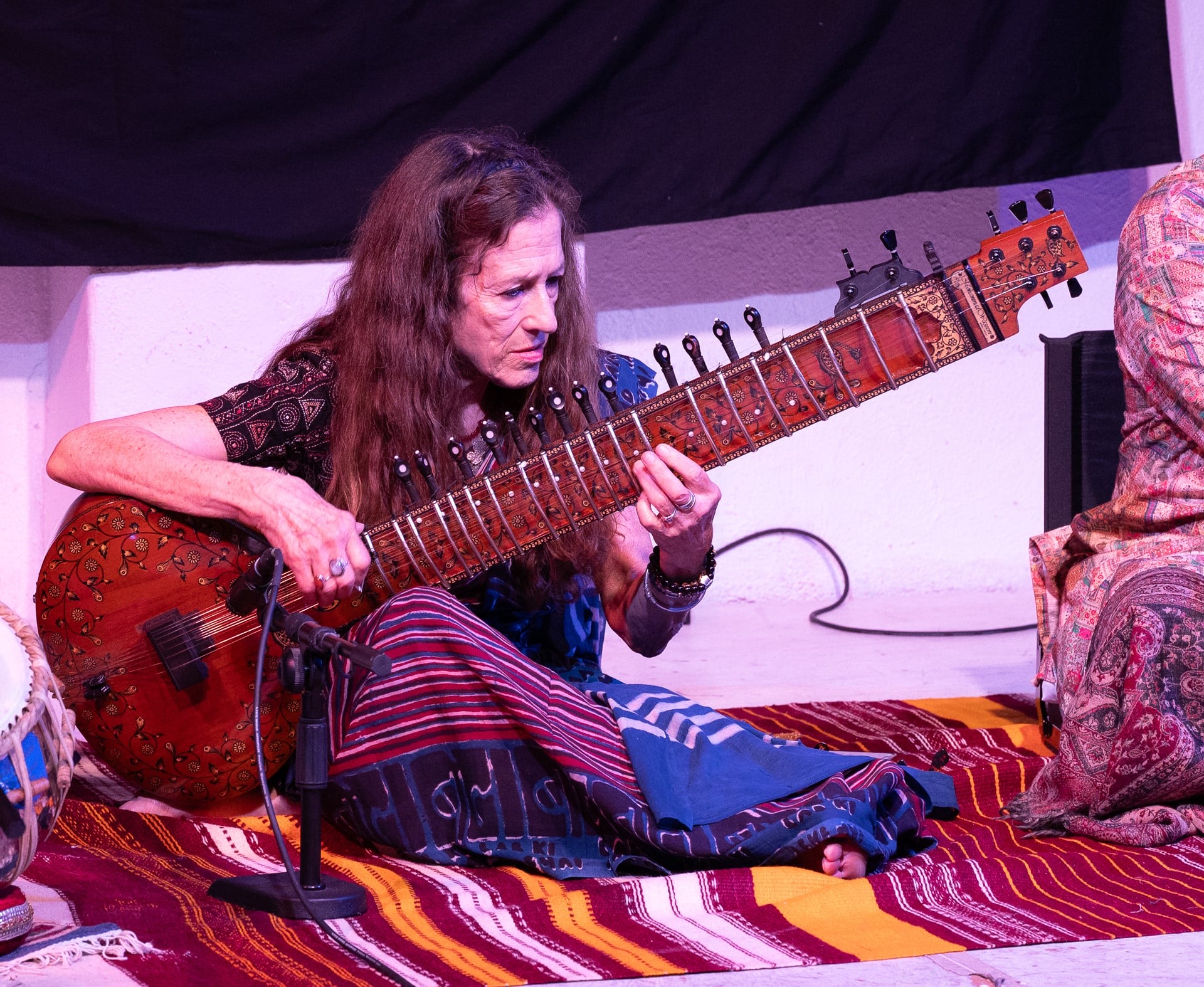
Dr. Amie Maciszewski is an internationally acclaimed sitarist, teaching artist, and public ethnomusicologist whose work brings music and the arts together in service of humanity and the planet. For nearly five decades, she has studied, performed, taught, and researched South Asian music and culture across North America, India, Pakistan, Europe, and Japan.
She earned gold-medalist and merit-scholar degrees in Hindustani instrumental music from Santiniketan, India, where she trained under Pandit Suresh Misra. She later studied in Kolkata with Ustad Aashish Khan and Girija Devi. Her deep cultural immersion includes proficiency in Bengali, Hindi, and Urdu.
In 2006 she founded Sangeet Millennium Ensemble, a collaborative collective performing traditional Hindustani and world-fusion music. Named among the “Texas Top Ten” world-music bands, the ensemble was recognized by Texas State Representative Salman Bhojani in 2024.
Maciszewski has led approximately 200 residencies and workshops, released three CDs, and received support from organizations including the Texas Commission on the Arts, City of Dallas Office of Arts & Culture, and AT&T Performing Arts Center. Her honors include the Gandharva Award, a U.S. cultural diplomacy tour, and two Fulbright awards.
She holds a PhD in Ethnomusicology from the University of Texas at Austin and was a Killam Postdoctoral Fellow at the University of Alberta. Her research focuses on women performers, marginalized entertainers, and folk traditions in India and Pakistan. She has produced award-winning ethnographic films and published extensively on cultural performance, Indigenous knowledge, and eco-cultural sustainability.
This series is supported by the Boshell Family Foundation and the DMA’s Boshell Lecture Series Endowment Fund.
To request accessibility accommodations such as ASL interpretation, gallery stools, or wheelchairs, please send an email to access@dma.org.